Saturday, February 19, 2011
Scott Walker
Monday, November 29, 2010
More On Rights
Since the early twentieth century there has been a change in political thinking about what rights are and where they come from. The American Declaration of Independence states that people are, “endowed by their Creator with certain unalienable Rights “. The early liberal view represented by the Declaration of Independence held that rights are natural to humans. This is a stark contrast to when Cass Sunstein (2001) says that early constitutions protected rights without “...creating rights to minimally decent conditions of life. But in the late twentieth century and early twenty-first century, the trend is otherwise, with international documents, and most constitutions, creating rights to food shelter and more” (2001, 222) To be sure, these things are necessities, but they cannot be rights. Many who argue that government can create rights at the same time declare that there are universal human rights. If a government can create rights, then all rights are subjective and there are no universal rights. So in order for there to be universal human rights, they must be inherent in the human condition, and therefore not able to be created by any government.
To call necessities of life a right is to completely misunderstand what rights are. Rights are something a person is born with by the simple fact of being human, irrespective of where in the world that person is located. If it is not something inherent in being a person, then it simply is not a right. Things such as food, water, clothing, healthcare and housing are not something a person is born with, although they are necessities to be sure. When a person is born, no matter where they are in the world, they have one thing: their body. A person born in Ethiopia doesn't have food , a person born in Yemen doesn't have water, and so on.
If a body is the only thing each person naturally has, then it must follow that rights extend from a person owning his or her own body. If one owns his or her own body, they have the ability to communicate (as some people do not have the ability to vocally speak). Given that humans are the only species able to understand the complexities of rights and the consequences of violations of the rights of others, humans are the only species to have rights. So, humans can occupy and improve land that is not inhabited by another human. The improvements of this land can then be traded. To be able to trade, a person must communicate with another his or her willingness to do so, and in doing so enters into a contract. These contracts can then be used to trade for goods which are not provided on the land which the person occupies, i.e.: water, food, etc., since not every parcel of land is equally equitable. For those who are unable to find uninhabited parcels of land, they can use this right of contract to trade labor for these goods, which in turn may be traded for ones own parcel of land.
Necessities do not follow this logical progression from the body, as when a person is born they do not inherently have any of these items. In the case of a child these things are usually traded for by the parents or other caregivers. This is not to say the inhabitants of a country cannot decide to provide these items, but they cannot, and should not call them rights. Rights must be protected by a government, which does bear a cost for the protection; but necessities must be provided by these governments, which costs a great deal more. This presented itself in Hungary, where the Constitution stated, “Citizens of the Republic of Hungary have the right to social security”(Constitution of the Republic of Hungary). Solyom and Brunner (2000) described the difficulties which befell Hungary when its government was unable to provide these benefits due to a severe economic decline. Sajo (1996) points out how the government and the people came to an impasse when the International Monetary Fund (IMF) put restrictions on a loan which would have alleviated some of the governments fiscal problems. The IMF demanded that the Hungarian Government place restrictions on these rights in order the receive aid, an idea which the people rejected (Sajo, 1996). In this case, the Hungarian benefits were permitted to stand for the time as the IMF accepted a slower reform process and granted the loan (Sajo 1996).
After the economic downturn in 2008 and 2009 the cost of such programs has again become a problem for many European countries. In Greece there have been many accounts of riots as the government attempts to reign in the cost of benefits in the wake of a collapse which led to the Greek Government being bailed out by other members of the European Union. More recently, Ireland has fallen into trouble over its spending habits. With each collapse, these governments are losing sovereignty and being forced to acquiesce to the will of other countries.
Countries with extant constitutions which provide for these necessities cannot ignore what is written. A constitution is a promise to the people of what that government can and cannot due. If that promise is broken, then the government loses legitimacy and there is little hope for salvage. Instead what these countries should do is try to amend their constitutions to make these items priorities rather than calling them rights. To call them rights is to say that these things must be provided for the citizens, which is not sustainable. To call them priorities shows a commitment to the practices, but allows the systems to be re-evaluated when there is not enough capital to provide them.
Even if necessities are not rights, it is the right of the citizens to contractually obligate their government to address certain issues through a constitution. These constitutions should allow for breathing room in case of economic downturn. And if these necessities are guaranteed as rights in an extant constitution a government cannot ignore the obligation, but rather should attempt to amend the constitution to set these items as priorities instead of falsely and with great cost calling them rights.
References
Sunstein, Cass. “Designing Democracy: What Constitutions Do”
Oxford University Press. 2001.
Solyom, Laszlo and Brunner, Georg. 2000. “Hungarian Benefits Case”
In “Comparative Constitutional Law 2nd Edition”
Ed. Jackson & Tushnet.
The Foundation Press. New York. 2006
Sajo, Andras. 1996. “How the Rule of Law Killed Hungarian Welfare Reform”
In “Comparative Constitutional Law 2nd Edition”
Ed. Jackson & Tushnet.
The Foundation Press. New York. 2006
Friday, August 13, 2010
Immigration
Tuesday, May 11, 2010
The Boston Tea Party Was Over a Tax Cut?
You'll have to forgive me if I'm late to the party here; but I was educated in public school. I was always led to believe that The Boston Tea Party was done in outrage to high taxes. However, that was not the case; the Tea Act was actually a tax cut.
Yes, the act was designed to lower the cost of tea in the colonies and cut the taxes imposed on imported tea.
The point being argued wasn't really the the taxes, it was about cronyism. The East India Company complained to the King that Americans were not buying their tea because of the high taxes imposed on the goods. The company was paying a duty in England and the Colonies. To help out his friends at the East India Company the King eliminated the duty in England and lowered the tax in the colonies.
The outrage in the Colonies came from the fact that the act designated who could handle the product once it reached the states. The act set out a system that cut out American business an enriched the favored British merchants and bureaucrats.
From what I understand the President has been in the best schools in the country, so if he doesn't know this fact then it is a sad state of affairs. Worse yet, if he does know the truth, he ignores it for his own gain. Neither seems like a good proposition to me.
An act to allow a drawback of the duties of customs on the exportation of tea to any of his Majesty's colonies or plantations in America; to increase the deposit on bohea tea to be sold at the India Company's sales; and to impower the commissioners of the treasury to grant licences to the East India Company to export tea duty-free.
WHEREAS by an act, made in the twelfth year of his present Majesty's reign, (intituled, An act for granting a drawback of part of the customs upon the exportation of tea to Ireland, and the British dominions in America; for altering the drawback upon foreign sugars exported from Great Britain to Ireland; for continuing the bounty on the exportation of British-made cordage; for allowing the importation of rice from the British plantations into the ports of Bristol, Liverpoole, Lancaster, and Whitehaven, for immediate exportation to foreign parts; and to impower the chief magistrate of any corporation to administer the oath, and grant the certificate required by law, upon the removal of certain goods to London, which have been sent into the country for sale;) it is amongst other things, enacted, That for and during the space of five years, to be computed from and after the fifth day of July, one thousand seven hundred and seventy-two, there shall be drawn back and allowed for all teas which shall be sold after the said fifth day of July, one thousand seven hundred and seventy-two, at the publick sale of the united company of merchants of England trading to the East Indies, or which after that time shall be imported, by licence, in pursuance of the said therein and hereinafter mentioned act, made in the eighteenth year of the reign of his late majesty King George the Second, and which shall be exported from this kingdom, as merchandise, to Ireland, or any of the British colonies or plantations in America, three-fifth parts of the several duties of customs which were paid upon the importation of such teas; which drawback or allowance, with respect to such teas as shall be exported to Ireland, shall be made to the exporter, in such manner, and under such rules, regulations, securities, penalties, and forfeitures, as any drawback or allowance was then payable, out of the duty of customs upon the exportation of foreign goods to Ireland; and with respect to such teas as shall be exported to the British colonies and plantations in America, the said dreawback or allowance shall be made in such manner, and under such rules, regulations, penalties, and forfeitures, as any drawback or allowance payable out of the duty of customs upon foreign goods exported to foreign parts, was could, or might be made, before the passing of the said act of the twelfth year of his present Majesty's reign, (except in such cases as are otherwise therein provided for:) and whereas it may tend to the benefit and advantage of the trade of the said united company of merchants of England trading to the East Indies, if the allowance of the drawback of the duties of customs upon all teas sold at the publick sales of the said united company, after the tenth day of May, one thousand seven hundred and seventy-three, and which shall be exported from this kingdom, as merchandise, to any of the British colonies or plantations in America, were to extend to the whole of the said duties of customs payable upon the importation of such teas; may it therefore please your Majesty that it may be enacted; and be it enacted by the King's most excellent majesty, by and with the advice and consent of the lords spiritual and temporal, and commons, in this present parliament assembled, and by the authority of the same, That there shall be drawn back and allowed for all teas, which, from and after the tenth day of May, one thousand seven hundred and seventy-three, shall be sold at the publick sales of the said united company, or which shall be imported by licence, in pursuance of the said act made in the eighteenth year of the reign of his late majesty King George the Second, and which shall, at any time hereafter, be exported from this kingdom, as merchandise, to any of the British colonies or plantations in America, the whole of the duties of customs payable upon the importation of such teas; which drawback or allowance shall be made to the exporter in such manner, and under such rules, regulations, and securities, and subject to the like penalties and forfeitures, as the former drawback or allowance granted by the said recited act of the twelfth year of his present Majesty's reign, upon tea exported to the said British colonies and plantations in America was, might, or could be made, and was subject to by the said recited act, or any other act of parliament now in force, in as full and ample manner, to all intents and purposes, as if the several clauses relative thereto were again repeated and re-enacted in this present act.
II. And whereas by one other act made in the eighteenth year of the reign of his late majesty King George the Second, (intituled, An act for repealing the present inland duty of four shillings per pound weight upon all tea sold in Great Britain; and for granting to his Majesty certain other inland duties in lieu thereof; and for better securing the duty upon tea, and other duties of excise; and for pursuing offenders out of one county into another,) it is, amongst other things, enacted, That every person who shall, at any publick sale of tea made by the united company of merchants of England trading to the East Indies, be declared to be the best bidder for any lot or lots of tea, shall, within three days after being so declared the best bidder or bidders for the same, deposit with the said united company, or such clerk or officer as the said company shall appoint to receive the same, forty shillings for every tub and for every chest of tea; and in case any such person or persons shall refuse or neglect to make such deposit within the time before limited, he, she, or they, shall forfeit and lose six times the value of such deposit directed to be made as aforesaid, to be recovered by action of debt, bill, plaint, or information, in any of his Majesty's courts of record at Westminster, in which no essoin, protection, or wager of law, or more than one imparlance, shall be allowed; one moiety of which forfeiture shall go to his Majesty, his heirs and successors, and the other moiety to such person as shall sue or prosecute for the same; and the sale of all teas, for which such deposit shall be neglected to be made as aforesaid, is thereby declared to be null and void, and such teas shall be again put up by the said united company to publick sale, within fourteen days after the end of the sale of teas at which such teas were sold; and all and every buyer or buyers, who shall have neglected to make such deposit as aforesaid, shall be, and is and are thereby rendered incapable of bidding for or buying any teas at any future publick sale of the said united company: and whereas it is found to be expedient and necessary to increase the deposit to be made by any bidder or bidders for any lot or lots of bohea teas, at the publick sales of teas to be made by the said united company; be it enacted by the authority aforesaid, That every person who shall, after the tenth day of May, one thousand seven hundred and seventy-three, at any publick sale of tea to be made by the said united company of merchants of England trading to the East Indies, be declared to be the best bidder or bidders for any lot or lots of bohea tea, shall, within three days after being so declared the best bidder or bidders for the same, deposit with the said united company, or such clerk or officer as the said united company shall appoint to receive the same, four pounds of lawful money of Great Britain for every tub and for every chest of bohea tea, under the same terms and conditions, and subject to the same forfeitures, penalties, and regulations, as are mentioned and contained in the said recited act of the eighteenth year of the reign of his said late Majesty.
III. And be it further enacted by the authority aforesaid, That it shall and may be lawful for the commissioners of his Majesty's treasury, or any three or more of them, or for the high treasurer for the time being, upon application made to them by the said united company of merchants of England trading to the East Indies for that purpose, to grant a licence or licences to the said united company, to take out of their warehouses, without the same having been put up to sale, and to export to any of the British plantations in America, or to any parts beyond the seas, such quantity or quantities of tea as the said commissioners of his Majesty's treasury, or any three or more of them, or the high treasurer for the time being, shall think proper and expedient, without incurring any penalty or forfeiture for so doing; any thing in the said in part recited act, or any other law, to the contrary notwithstanding.
IV. And whereas by an act made in the ninth and tenth years of the reign of King William the Third, (intituled, An act for raising a sum not exceeding two millions, upon a fund, for payment of annuities, after the rate of eight pounds per centum per annum; and for settling the trade to the East Indies,) and by several other acts of parliament which are now in force, the said united company of merchants of England trading to the East Indies are obliged to give security, under their common seal, for payment of the duties of customs upon all unrated goods imported by them, so soon as the same shall be sold; and for exposing such goods to sale, openly and fairly, by way of auction, or by inch of candle, within the space of three years from the importation thereof: and whereas it is expedient that some provision should be made to permit the said company, in certain cases, to export tea, on their own account, to the British plantations in America, or to foreign parts, without exposing such tea, to sale here, or being charged with the payment of any duty for the same; be it therefore enacted by the authority aforesaid, That from and after the passing of this act, it shall and may be lawful for the commissioners of his Majesty's treasury, or any three or more of them, or the high treasurer for the time being, to grant a licence or quantity of licences to the said united company, to take out of their warehouses such quantity or quantities of tea as the said commissioners of the treasury, or any three or more of them, or the high treasurer for the time being, shall think proper, without the same having been exposed to sale in this kingdom; and to export such tea to any of the British colonies or plantations in America, or to foreign parts, discharged from the payment of any customs or duties whatsoever; any thing in the said recited act, or any other act to the contrary notwithstanding.
V. Provided always, and it is hereby further enacted by the authority aforesaid, That a due entry shall be made at the custom-house, of all such tea so exported by licence, as aforesaid, expressing the quantities thereof, at what time imported, and by what ship; and such tea shall be shipped for exportation by the proper officer for that purpose, and shall, in all other respects, not altered by this act, be liable to the same rules, regulations, restrictions, securities, penalties, and forfeitures, as tea penalties, &c. exported to the like places was liable to before the passing this act: and upon the proper officer's duty, certifying the shipping of such tea to the collector and comptroller of his Majesty's customs for the port of London, upon the back of the licence, and the exportation thereof, verified by the oath of the husband or agent for the said united company, to be wrote at the bottom of such certificate, and sworn before the said collector and comptroller of the customs, (which oath they are hereby impowered to administer,) it shall and may be lawful for such collector and comptroller to write off and discharge the quantity of tea so exported from the warrant of the respective ship in which such tea was imported.
VI. Provided nevertheless, That no such licence shall be granted, unless it shall first be made to appear to the satisfaction of the commissioners of his Majesty's treasury, or any three or more of them, or the high treasurer for the time being, that at the time of taking out such teas, for the exportation of which licence or licences shall be granted, there will be left remaining in the warehouses of the said united company, a quantity of tea not less than ten millions of pounds weight; any thing herein, or in any other act of parliament, contained to the contrary thereof notwithstanding.
.
Saturday, April 24, 2010
Yellowstone, Fires, & The Free Market
Tuesday, March 9, 2010
Healthcare Is Not A Right
Monday, August 24, 2009
Echoes of the Past
Thursday, June 18, 2009
What Should These united states Be Like; In My Opinion
Tuesday, May 5, 2009
Self Interest V Selfishness
Thursday, April 23, 2009
Patrick Henry Is Dead
Wednesday, April 15, 2009
Political Office
Sunday, April 12, 2009
A Free Man Bows To No King
Monday, April 6, 2009
The Nature of rights Part II
Tuesday, March 31, 2009
The Un-Spoken Word
Tuesday, March 17, 2009
The Nature of Rights
Saturday, February 21, 2009
Spectral Analysis

This is how I view the political spectrum, as a circle; starting and ending in anarchy. From anarchy you go counter-clockwise adding more governance. Notice; there are no distinct lines between categories; they simply blend together.
Anarchy: There is no state. There is no governance.
Anarchistic Capitalism: There is no state; all functions of government are performed willingly through capitalist transactions. There is slight governance.
Conservatism: The state has moderate power; providing defense, arbitration through courts, basic education and moderate taxation. Personal liberties are slightly infringed. The state plays a very small role in the economy. Personal property is slightly infringed. There is moderate governance.
Modern Liberalism: The state has extensive power; providing defense, arbitration through courts, extensive education, progressive taxation and social programs. Personal liberties are greatly infringed. The state plays a large role in the economy. Personal property is regulated by the state. There is extensive governance.
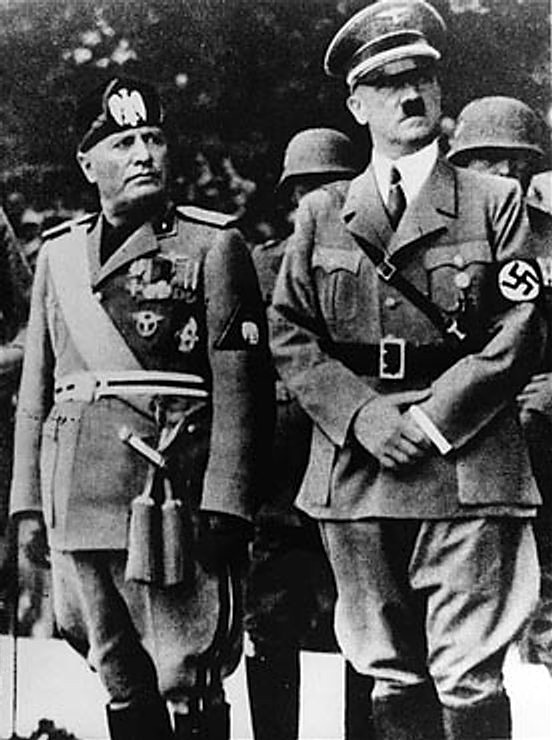
Fascism: The state has over-reaching power; providing defense, arbitration through courts, extensive education, progressive taxation and social programs. Personal liberties are greatly infringed. The state controls the economy through extensive regulation. Personal property is heavily regulated by the state. There is extensive governance.
Socialism: The state has almost complete control; providing defense, arbitration through courts, extensive education, progressive taxation and social programs. Personal liberties are severely infringed. The state controls the economy through ownership of all business. Personal property is completely regulated by the state. There is extensive governance.
Communism: The state has complete control; providing defense, arbitration through courts, extensive education, progressive taxation, social programs, clothing, food and housing. Personal liberties do not exist. The state controls the economy through ownership of all business. Personal property does not exist. There is complete governance.
Anarchistic Communism: There is no state. All functions of the state are performed by the majority in the community. Personal liberties are severely infringed. The economy is controlled by the majority in the community. Personal property does not exist. There is complete governance.
Anarchy: There is no state. There is no governance.
Governance:
- The act, process, or power of governing; government: "Regaining a sense of the state is thus an absolute priority, not only for an effective policy against . . . terrorism, but also for governance itself" (Moorhead Kennedy).
- The state of being governed.
Govern:
Gov"ern\, v. i. To exercise authority; to administer the laws; to have the control. --Dryden.
I would argue that the current Republican party is somewhere in the blending of conservatism and modern liberalism; the Democratic party is somewhere in the blending of modern liberalism and fascism; and ther Libertarian party is somewhere in the blending of classical liberalism and conservatism. I think true anarchy can not exist when there is more than one person; so it is very hard to come by in reality.
Friday, February 13, 2009
Marxy Marx
1. Abolition of property in land and application of all rents of land to public purposes.
Getting there; although we still may own our land, it isn't really ours, what with the abuse of emminant domain going on and all the regulations and zoning requirements put on the land.
Check
Getting there; with the "Death Tax"
Well; we don't really have emmigrant issues or rebels, yet.
Check
6. Centralization of the means of communication and transport in the hands of the state.
7. Extension of factories and instruments of production owned by the state; the bringing into cultivation of waste lands, and the improvement of the soil generally in accordance with a common plan.
8. Equal obligation of all to work. Establishment of industrial armies, especially for agriculture.
It seems more like they don't want people to work at this stage, so as to get them on their side; this one probably isn't far off.
9. Combination of agriculture with manufacturing industries; gradual abolition of all the distinction between town and country by a more equable distribution of the populace over the country.
10. Free education for all children in public schools. Abolition of children's factory labor in its present form. Combination of education with industrial production, etc.
Check
Sunday, February 1, 2009
What Powers Should the Government Have?
Tuesday, January 27, 2009
FDR's policies prolonged Depression by 7 years, UCLA economists calculate
I just found this article this article. I pasted it here, but you can follow the link and read it as well. Interesting stuff. And sadly right now it seems all to familiar.
By
Two UCLA economists say they have figured out why the Great Depression dragged on for almost 15 years, and they blame a suspect previously thought to be beyond reproach: President Franklin D. Roosevelt.
After scrutinizing Roosevelt's record for four years, Harold L. Cole and Lee E. Ohanian conclude in a new study that New Deal policies signed into law 71 years ago thwarted economic recovery for seven long years.
"Why the Great Depression lasted so long has always been a great mystery, and because we never really knew the reason, we have always worried whether we would have another 10- to 15-year economic slump," said Ohanian, vice chair of UCLA's Department of Economics. "We found that a relapse isn't likely unless lawmakers gum up a recovery with ill-conceived stimulus policies."
In an article in the August issue of the Journal of Political Economy, Ohanian and Cole blame specific anti-competition and pro-labor measures that Roosevelt promoted and signed into law June 16, 1933.
"President Roosevelt believed that excessive competition was responsible for the Depression by reducing prices and wages, and by extension reducing employment and demand for goods and services," said Cole, also a UCLA professor of economics. "So he came up with a recovery package that would be unimaginable today, allowing businesses in every industry to collude without the threat of antitrust prosecution and workers to demand salaries about 25 percent above where they ought to have been, given market forces. The economy was poised for a beautiful recovery, but that recovery was stalled by these misguided policies."
Using data collected in 1929 by the Conference Board and the Bureau of Labor Statistics, Cole and Ohanian were able to establish average wages and prices across a range of industries just prior to the Depression. By adjusting for annual increases in productivity, they were able to use the 1929 benchmark to figure out what prices and wages would have been during every year of the Depression had Roosevelt's policies not gone into effect. They then compared those figures with actual prices and wages as reflected in the Conference Board data.
In the three years following the implementation of Roosevelt's policies, wages in 11 key industries averaged 25 percent higher than they otherwise would have done, the economists calculate. But unemployment was also 25 percent higher than it should have been, given gains in productivity.
Meanwhile, prices across 19 industries averaged 23 percent above where they should have been, given the state of the economy. With goods and services that much harder for consumers to afford, demand stalled and the gross national product floundered at 27 percent below where it otherwise might have been.
"High wages and high prices in an economic slump run contrary to everything we know about market forces in economic downturns," Ohanian said. "As we've seen in the past several years, salaries and prices fall when unemployment is high. By artificially inflating both, the New Deal policies short-circuited the market's self-correcting forces."
The policies were contained in the National Industrial Recovery Act (NIRA), which exempted industries from antitrust prosecution if they agreed to enter into collective bargaining agreements that significantly raised wages. Because protection from antitrust prosecution all but ensured higher prices for goods and services, a wide range of industries took the bait, Cole and Ohanian found. By 1934 more than 500 industries, which accounted for nearly 80 percent of private, non-agricultural employment, had entered into the collective bargaining agreements called for under NIRA.
Cole and Ohanian calculate that NIRA and its aftermath account for 60 percent of the weak recovery. Without the policies, they contend that the Depression would have ended in 1936 instead of the year when they believe the slump actually ended: 1943.
Roosevelt's role in lifting the nation out of the Great Depression has been so revered that Time magazine readers cited it in 1999 when naming him the 20th century's second-most influential figure.
"This is exciting and valuable research," said Robert E. Lucas Jr., the 1995 Nobel Laureate in economics, and the John Dewey Distinguished Service Professor of Economics at the University of Chicago. "The prevention and cure of depressions is a central mission of macroeconomics, and if we can't understand what happened in the 1930s, how can we be sure it won't happen again?"
NIRA's role in prolonging the Depression has not been more closely scrutinized because the Supreme Court declared the act unconstitutional within two years of its passage.
"Historians have assumed that the policies didn't have an impact because they were too short-lived, but the proof is in the pudding," Ohanian said. "We show that they really did artificially inflate wages and prices."
Even after being deemed unconstitutional, Roosevelt's anti-competition policies persisted — albeit under a different guise, the scholars found. Ohanian and Cole painstakingly documented the extent to which the Roosevelt administration looked the other way as industries once protected by NIRA continued to engage in price-fixing practices for four more years.
The number of antitrust cases brought by the Department of Justice fell from an average of 12.5 cases per year during the 1920s to an average of 6.5 cases per year from 1935 to 1938, the scholars found. Collusion had become so widespread that one Department of Interior official complained of receiving identical bids from a protected industry (steel) on 257 different occasions between mid-1935 and mid-1936. The bids were not only identical but also 50 percent higher than foreign steel prices. Without competition, wholesale prices remained inflated, averaging 14 percent higher than they would have been without the troublesome practices, the UCLA economists calculate.
NIRA's labor provisions, meanwhile, were strengthened in the National Relations Act, signed into law in 1935. As union membership doubled, so did labor's bargaining power, rising from 14 million strike days in 1936 to about 28 million in 1937. By 1939 wages in protected industries remained 24 percent to 33 percent above where they should have been, based on 1929 figures, Cole and Ohanian calculate. Unemployment persisted. By 1939 the U.S. unemployment rate was 17.2 percent, down somewhat from its 1933 peak of 24.9 percent but still remarkably high. By comparison, in May 2003, the unemployment rate of 6.1 percent was the highest in nine years.
Recovery came only after the Department of Justice dramatically stepped enforcement of antitrust cases nearly four-fold and organized labor suffered a string of setbacks, the economists found.
"The fact that the Depression dragged on for years convinced generations of economists and policy-makers that capitalism could not be trusted to recover from depressions and that significant government intervention was required to achieve good outcomes," Cole said. "Ironically, our work shows that the recovery would have been very rapid had the government not intervened."
-UCLA-
LSMS368